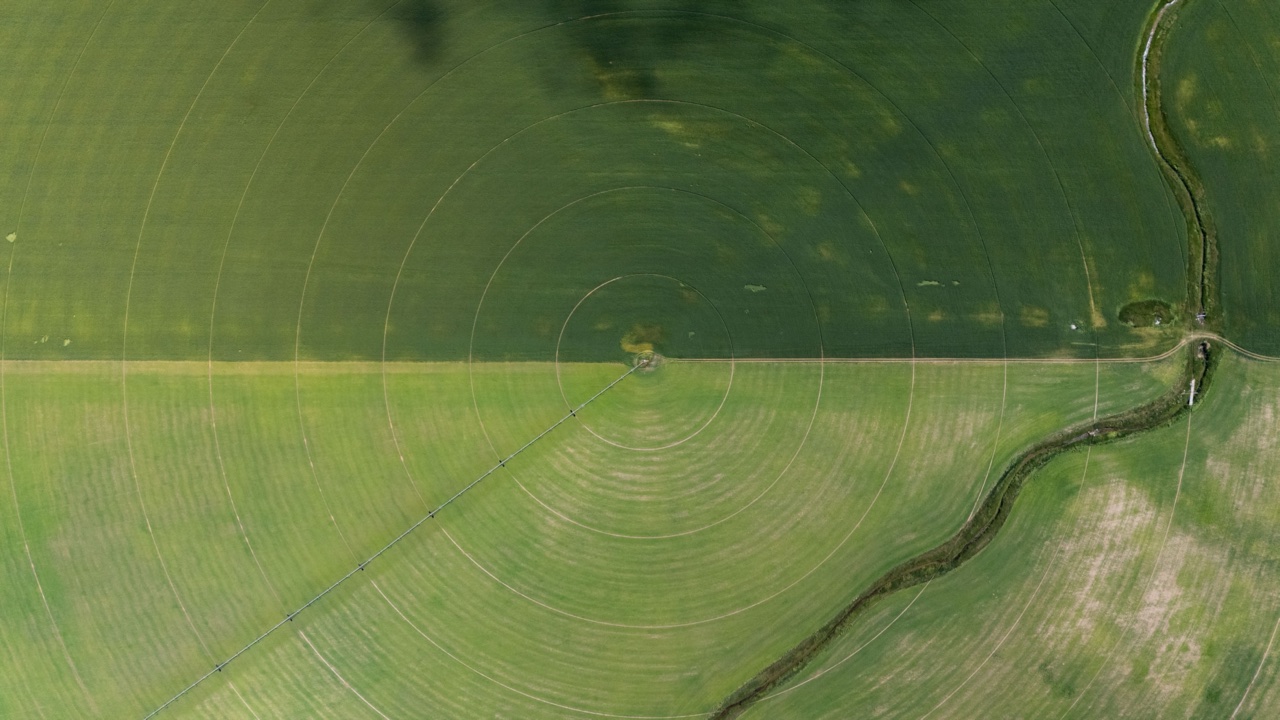
Smart farming pilots tend to work. A sensor network covering one field, a set of soil probes on a test plot, automated irrigation on a single zone — these succeed often enough that the agricultural technology sector has no shortage of case studies. What the case studies underrepresent is how frequently those same systems fail to scale: the pilot covers 80 acres and works well, the deployment expands to 800 acres and reliability collapses. The same technology, the same protocols, a fundamentally different outcome.
The scaling failures in precision agriculture share a consistent set of root causes, and most of them come back to wireless connectivity infrastructure that was adequate for a pilot and inadequate at scale.
The Coverage Assumption That Doesn’t Hold at Scale
Pilot deployments are usually set up around a gateway positioned centrally, with sensors placed close enough to ensure reliable communication during the evaluation period. This setup is optimized to make the technology look good — and it does, because connectivity at short range in a relatively clean RF environment is easy.
When the same network expands to cover an entire farm operation, several things change simultaneously. Distances increase. Terrain that wasn’t in the original pilot area introduces new propagation challenges. The number of devices on the network grows, introducing congestion in dense deployments. Buildings, equipment, and infrastructure that weren’t near the original gateway location now sit between some devices and the gateway.
The Antenna Solutions that work at pilot scale — often whatever came standard with the gateway hardware — don’t necessarily scale with the network. A standard-gain gateway antenna adequate for a 50-acre pilot may cover only 40% of an 800-acre expansion reliably.
Terrain and Vegetation: The Variables Pilots Ignore
Most pilot deployments run on bare or early-season fields. The technology evaluation period is often in spring, when crops are short or the ground is freshly tilled. RF propagation over open, flat agricultural land at this stage is about as favorable as it gets.
At full crop height — a corn canopy in August, a dense cover crop, a mature vineyard — the attenuation profile of the field changes substantially. The RF signal that passed easily across 300 meters of open field in April encounters significant absorption and scattering at the same distance in July. Sensors that reported reliably during the spring pilot may become unreliable during the growing season when the data is most needed.
Terrain variation compounds this. Agricultural land that appears flat on a topo map has enough micro-variation — gentle rises, drainage channels, tree lines, farm buildings — to create coverage shadows that don’t exist in a controlled evaluation. The gateway antenna that has line-of-sight to every sensor in a flat pilot area may have obstructed paths to 20% of the sensors once the network expands to include a different section of the farm.
Protocol Selection and Its Connectivity Implications
The choice of wireless protocol is often made at the technology selection stage based on data rate requirements, battery life targets, and available hardware. The connectivity implications of that choice — how the protocol handles coverage at the edge, how it degrades gracefully when signal is weak, what happens to the network when a gateway is unreachable — are less often considered.
LoRa and LoRaWAN, the dominant LPWAN protocols in agricultural IoT, handle variable signal strength well: they adapt the spreading factor (a parameter that affects range vs. data rate) to maintain connectivity at greater distances, at the cost of lower data throughput. A sensor at the edge of coverage may report data at a lower frequency or with higher power consumption, but it continues to report. This graceful degradation is valuable in large-area agricultural deployments where some sensors will inevitably be at the edge of coverage.
Wi-Fi-based agricultural sensors, by contrast, have a much harder coverage edge — the device either connects or it doesn’t. For large-area deployments, this creates a binary coverage problem that requires dense infrastructure to avoid leaving devices with no connectivity.
Cellular-connected sensors avoid the gateway coverage problem entirely by using the public cellular network, but introduce recurring data costs and dependence on carrier coverage — which is often adequate for most of a large farm but may have gaps in low-population-density agricultural areas.
Infrastructure Density vs Antenna Performance
One of the most common mistakes in scaling a pilot is trying to extend coverage through better antennas rather than through additional infrastructure. A higher-gain gateway antenna can extend the coverage radius somewhat, but there are physical limits to what antenna gain can achieve, and those limits are typically encountered before the coverage requirements of a large farm operation are met.
The more reliable scaling approach is a network designed from the outset with multiple gateways at calculated positions. For LoRaWAN-based agricultural networks, gateway hardware costs have dropped to a level where deploying multiple gateways across a large property is economically reasonable. A three-gateway network with gateways placed to cover thirds of a large property provides more reliable coverage than a one-gateway network trying to cover the same area with the highest-gain antenna available.
The infrastructure density question — how many gateways, where — is ideally answered by a coverage planning process that accounts for the actual terrain, crop height at full growth, and sensor placement requirements. This planning, done before equipment purchase, prevents the expensive cycle of deploying too little infrastructure, experiencing coverage failures, adding hardware reactively, and still ending up with coverage gaps.
Data Backhaul: The Overlooked Connectivity Layer
The connectivity problem in smart farming isn’t only about getting data from sensors to the gateway. It’s also about getting data from the gateway to the management system where it’s used. Gateway backhaul — the connection from the gateway to the internet — is often an afterthought, and it’s a point of failure that can take down an entire sensor network regardless of how well the sensor-to-gateway link is working.
In agricultural settings, gateway backhaul options include wired Ethernet (available if the gateway is near a building with network infrastructure), cellular (available where carrier coverage is adequate), and in some cases satellite. Each option has different reliability, latency, and ongoing cost characteristics.
A gateway with excellent sensor coverage but unreliable backhaul produces the same symptom as a gateway with poor sensor coverage: sensor data doesn’t reach the management system. Diagnosing which part of the system is failing requires visibility into both the sensor link and the backhaul link — something many agricultural IoT management platforms don’t provide clearly.
Designing backhaul reliability into the system — using redundant backhaul options where reliability is critical, monitoring the backhaul connection separately from sensor network health — prevents backhaul failures from being misidentified as sensor network problems.